

Small Food Processing, Cold Storage & Light Industrial Refrigeration Repair in Knoxville, TN
When a food processing prep room, meat or produce locker, commissary chill box, or cold storage warehouse drifts out of temperature spec, entire pallets and HACCP batches are put at risk. JW HVACR LLC diagnoses and repairs multi-evaporator cold rooms, 3-phase condensing units, and pump-down/defrost controls within 60 miles of Knoxville—backed by our 90-Day Repair Warranty.
Based at 823 Reed Dr, Powell, TN 37849 • Office hours 8:00 AM–5:00 PM Mon–Fri • 24/7 emergency service available after hours
Food Processing, Cold Storage & Light Industrial Systems We Service
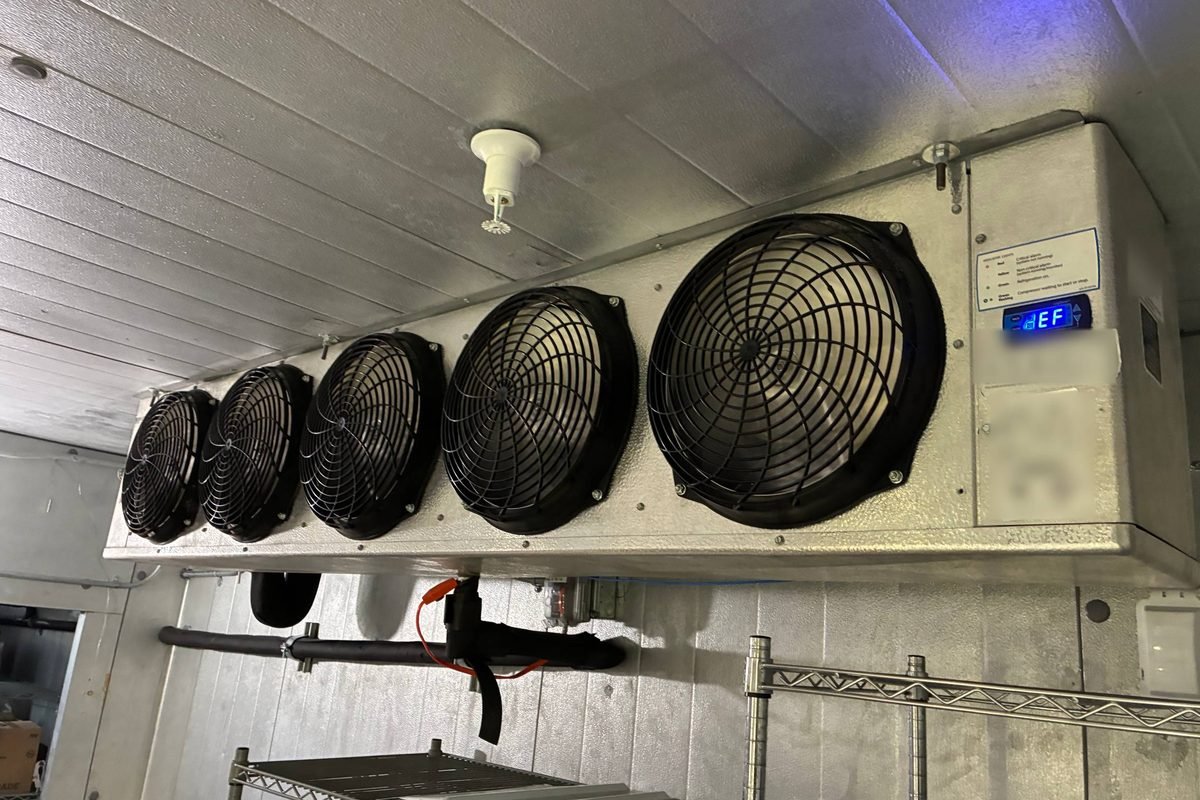
We troubleshoot multi-fan unit coolers, liquid-line solenoid pump-down sequences, EPR/CPR pressure regulators, and 3-phase condensing units across East Tennessee facilities.
Food Processing Prep Rooms & Chill Rooms (34°F–50°F)
- Refrigerated meat cutting rooms, USDA/FDA inspected food prep rooms, commissary kitchens, and packaging zones
- Low-velocity / dual-discharge ceiling unit coolers engineered to hold room temperature without excessive product dehydration
- Washdown-duty fan motor replacements, condensate drain pan heaters, and post-sanitation dehumidification recovery
Cold Storage Warehouses, Blast Freezers & Meat Lockers
- Multi-evaporator cold storage bays, produce/floral coolers, and sub-zero holding freezers (
-10°F to -20°F) - High-velocity blast chillers and blast freezers for rapid post-cook or post-pack core temperature pull-down
- Heavy-duty pallet/dock door strip curtains, heated freezer door thresholds, and R-32 envelope infiltration repairs (
10 CFR § 431.306)
3-Phase Condensing Units, EPR/CPR Valves & Defrost Controls
208–230Vand460V3-phase scroll and semi-hermetic condensing units, phase monitors, oil separators, and receivers- Liquid-line solenoid pump-down circuits, evaporator pressure regulators (EPRs), crankcase pressure regulators (CPRs), and TXVs
- Multi-evaporator electric and hot-gas defrost sequencing, contactors, and EPA AIM Act (
40 CFR § 84.106) leak compliance
Technical Schematic: Cold Storage Pump-Down, EPR & Defrost Loop
Commercial cold rooms and processing bays rely on automatic pump-down solenoids, pressure regulators (EPR/CPR), and timed high-wattage defrost to maintain tight HACCP temperature logs.
Food Processing & Cold Storage Diagnostic Table: Symptom vs. Repair
Use this symptom matrix for safe floor-manager checks before calling our commercial refrigeration technician:
| Symptom You Observe | Most Likely Root Cause | Safe 5-Minute Facility Check | JW HVACR Diagnostic & Repair |
|---|---|---|---|
| Prep room or cold storage bay drifts above target HACCP / USDA temperature limits | Fouled outdoor condenser, stuck liquid-line solenoid valve, starved TXV, dead evaporator fan section, or refrigerant leak | Check the room's independent calibrated log thermometer and verify dock/strip doors are closed and pallet stacks clear the evaporator intake | Inspect liquid-line sight glass and superheat/subcooling, test solenoid coil & plunger, replace failed fan motor, and perform EPA-compliant leak repair |
| Multi-fan unit cooler ices solid across the coil face after daily washdown shifts | Defrost schedule not matched to washdown moisture load, burned-out defrost heater rod, or failed defrost termination/fan-delay switch | Allow ceiling fans to pull excess steam out or squeegee standing floor water before restarting cold-room refrigeration after hot washdown | Amp-check each 208–460V defrost heater element, replace failed heater contactor or fan-delay klixon, and reprogram post-washdown defrost cycles |
| 3-phase outdoor condensing unit short-cycles on and off every 30–60 seconds during off-cycle | Leaking liquid-line pump-down solenoid valve or leaking compressor discharge reed valve allowing pressure to bleed back into the low side | Listen at the outdoor unit when the room thermostat is satisfied to see if the compressor repeatedly kicks back on briefly | Pump down and isolate the low side, test pressure rise across the liquid-line solenoid seat, and rebuild or replace the leaking solenoid valve |
| Processing room coil freezes up even though the room setpoint is 42°F–48°F | Out-of-calibration evaporator pressure regulator (EPR) valve, low airflow across the coil, or low suction pressure dropping coil below 32°F | Check that return air grilles and plastic strip curtains are not sucked against the back of the unit cooler housing | Measure evaporator coil saturation pressure at the outlet header, adjust or replace the EPR valve, and balance TXV superheat for above-freezing coil operation |
| Compressor trips on oil-pressure safety control, high-pressure cutout, or phase-loss monitor | Low winter head-pressure flooding the receiver, failed crank-case heater, clogged oil return separator float, or 3-phase voltage imbalance | Check the 3-phase breaker and phase monitor indicator LEDs; never repeatedly mash a tripped manual oil-safety reset button | Test 3-phase voltage balance under load, inspect oil level sight glass and crankcase heater, test head-pressure control valve, and verify safe oil return |
Verifiable Technical & Regulatory Standards Cited on This Page
- U.S. Department of Agriculture (USDA FSIS) — Sanitation & Processing Room Temperature Control (
9 CFR § 416.2(b)): Federal facilities and refrigeration performance requirements for meat, poultry, and food processing establishments to prevent condensation, adulteration, and microbial growth. Read 9 CFR § 416.2 (eCFR) - U.S. Food and Drug Administration (FDA) — FSMA Current Good Manufacturing Practice & Preventive Controls for Human Food (
21 CFR Part 117, §§ 117.20 & 117.40): Federal cold-storage, temperature-monitoring, and sanitary equipment design standards for food processing and refrigerated warehousing facilities. Read 21 CFR Part 117 (eCFR) - U.S. Department of Energy (DOE) — Walk-In Coolers & Cold Storage Envelope / Refrigeration Standards (
10 CFR Part 431 Subpart R, §§ 431.301–431.306): Federal energy efficiency, R-25/R-32 thermal insulation, and infiltration standards for commercial walk-in and cold storage compartments. Read 10 CFR Part 431 Subpart R (eCFR) - U.S. Environmental Protection Agency (EPA) — Clean Air Act Section 608 (
40 CFR § 82.161) & AIM Act Commercial Leak Repair Rule (40 CFR § 84.106): Federal technician certification and mandatory leak-rate calculation, 30-day repair, and verification testing rules for commercial and industrial process refrigeration systems (≥15 lb charge). Read 40 CFR § 84.106 (eCFR) · ASHRAE Handbook — Refrigeration
Trusted by Knoxville-Area Commercial Food & Hospitality Operations
Verified 5.0 ★ Google reviews from local commercial refrigeration customers in the Knoxville area.
“Fast response and excellent communication. Our walk-in cooler went down unexpectedly and they got us back up and running before we lost product.”
“Reliable service and great attention to detail. Clear diagnosis on our kitchen refrigeration equipment, backed by a warranty.”
Request Food Processing or Cold Storage Refrigeration Service
Tell us what your cold storage room, prep room, blast freezer, or condensing unit is doing (or request a Custom Quarterly Commercial PM Proposal). Sends directly to info@jwhvacr.com—we respond during office hours (8:00 AM–5:00 PM Mon–Fri). For an urgent cold-storage emergency or 24/7 emergency service after hours, call (865) 214-7334.
Cold Storage Room or Processing Bay Drifting Warm in the Knoxville Area?
Call JW HVACR LLC at (865) 214-7334. Every commercial repair is backed by our 90-Day Repair Warranty. Office hours 8:00 AM–5:00 PM Mon–Fri, with 24/7 emergency service available after hours within 60 miles of Knoxville.
📞 Call Now: (865) 214-7334